Saturday, February 28, 2015

Spring Excitement

As February comes to an end, the only thing that makes me okay with 2015 moving so fast is that March is quickly approaching and that means planting season is almost upon us. 

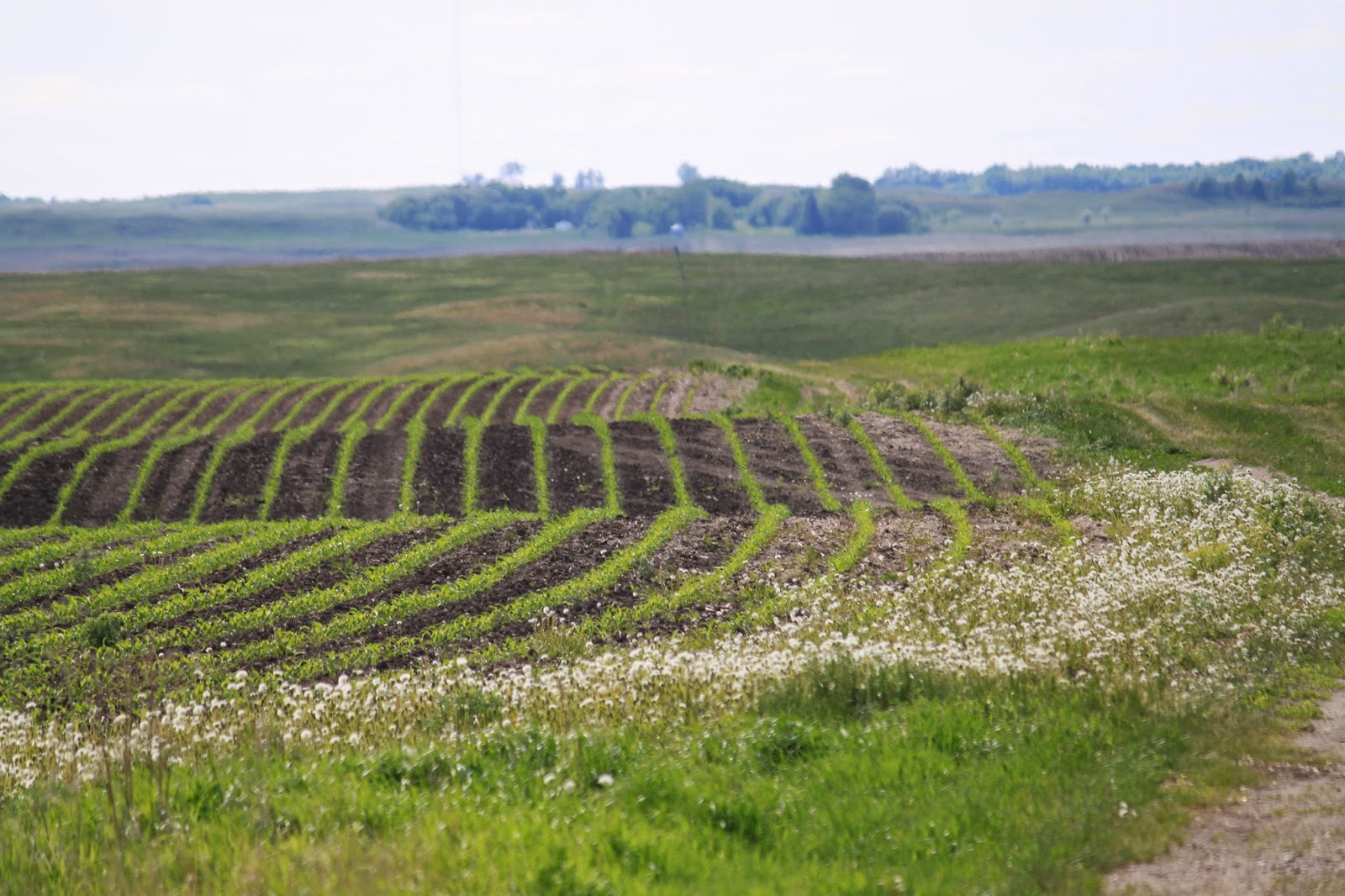
In honor of the upcoming transition of winter to spring, I am going to post some favorite pictures of being out in the field to get everyone thinking (probably a little prematurely) about the spring that is soon approaching.

Enjoy!


I may be just a little impatient to get out into the field...

Scoop.it - A New Way to Gather Thoughts


Back in November I attended a conference called Agriculture Future of America Leaders Conference, or AFA's AFALC, for short. I was a participant in Track 4, the conference's latest addition to its premier leadership program. One of the breakout sessions for Track 4 was led by James Spello, a technology guru. He let us know what bits of technology were in the pipeline for consumers and which technologies on the internet would be useful for us as college students and advocates for agriculture.

One of the technologies he informed us about was called "Scoop.it", a website that allows users to gather and curate bits of internet information. As a voracious reader of online bits of news and media, I thought that getting a profile on "Scoop.it" would be a great way to organize my thoughts and also a convenient link to direct people who ask me the question, "What have you been reading lately?" 

Finally, after months of thinking about it and telling myself I should put a profile together and keep it up, I've gotten myself a "Scoop.it" account. It can be found here. Right now I have just one page that serves as a collection area for articles/news stories/videos that I found to be important or inspirational to me, personally.

In the future I hope to create other sections that reflect the bookmarks I keep on Safari. These would include mostly areas from agriculture like "pesticides", "plant science", "soil science", etc. My hope is that by me curating these little collections I could help people find credible information on hot button issues causing a stir in agriculture and ag's consumer base. 

From what I've done with the site this week, I am really enjoying Scoop.it and encourage you to make a profile as well if you're interested in keeping a more visual record of your bookmarks or are interested in generating response from certain audiences. 

NDSU Ag Week

Although a long time coming, North Dakota State University will finally be holding a weeklong event celebrating the university's roots: agriculture.

The NDSU Ag Week Coalition, a group of students representing almost all of the NDSU College of Agriculture, Food Systems, and Natural Resources's student organizations, has been holding meetings since late last year to set up and organize activities for the week.

NDSU hasn't always been called NDSU. Starting in 1890, North Dakota Agricultural College opened its doors to students as a land-grant university, provided for by the Morrill Act. The mission of land-grant universities, as stated in the 1862 Morrill Act, is to focus on teaching of practical agriculture, science, military science and engineering.

Agriculture has been and continues to be a huge part of the North Dakota economy. The prevalence of agriculture in ND and related opportunities is reflected in the size of the NDSU CAFSNR. The CAFSNR is the second largest college on NDSU's campus, just behind the College of Engineering.

Activities for NDSU's Ag Week will begin on Monday, April 13th and will proceed until Friday, April 17th. Throughout the week NDSU students, faculty, employees and Fargo community members can take part in the following exciting activities:

- Available for purchase on Monday - Purchasing of new NDSU CAFSNR T-Shirts
- Monday Grill-Out on Shepperd Lawn
- Tuesday is Meat Day and the day of the Beef 5K
- Wednesday is Grain Day and the first day Farmland is available for viewing on campus
- Thursday is Dairy Day and Play 360 games will be played on campus
- Friday is Banquet day where the top 10 seniors in the CAFSNR will be recognized and where Steve Stark will give a keynote address

Information about the week and its activities can be found by following this link.

Saturday, February 21, 2015

When Nashville Gets Ice[d]

Last week I mentioned I was in Nashville, Tennessee for the National Young Farmers & Ranchers Conference with Farm Bureau. The conference as a whole was great. The discussion meet went well, our delegation met new agriculturalists from across the country and the breakout sessions allowed us to learn more about what's going on in different parts of the agriculture world.

The only downside to the conference was Monday. On Monday, conference attendees were supposed to go on tours in different parts of the state to either look at specific farming operations in TN or aspects of history pertinent to the area. A couple of students from NDSU and I were supposed to go on a Civil War tour in the area.

However, even the best laid schemes of mice and men often go awry. Starting Monday morning the city was pounded by a heavy ice storm. Inside the confines of our hotel we watched heavy rain beat down onto the plants and roads outside and then freeze into a slushy mess.

Thick slush outside the hotel; check out the water fountain icicles!
The heavy rain caused thick ice and Nashville was paralyzed. There were to be no tours on Monday and no trips to visit Civil War historic sites. Luckily for our group, a friend from Illinois brought The Farming Game with him so we stayed inside all day and experience the unpredictability of farming and agriculture with the help of a board game.

Arrivals and Departures at Nashville International Airport February 17th, 2015
Our group was lucky the next day as well; many of the flights going in and out of Nashville were cancelled. Attendees from New Mexico had to rent vans to drive back to New Mexico because flights wouldn't be going out that way until Thursday.

I'll never forget the ice storm that hit Nashville. I've often poked fun of how sensitive Southerners are to a little bit of snow. However, when storms happen in the South, like they did this past Monday, they get ice, not snow. I've seen first hand how dangerous those conditions can be and am thankful to have gained the experience of a southern ice storm.

North Dakota Agri-Women

Around Easter last year, I decided to apply for a scholarship through my sorority, Sigma Alpha, to attend a Fly-In in Washington, D.C. with American Agri-Women. I didn't think too much about it; I applied and waited with hopes I would be accepted to go.

About three days before the conference was to begin, I got an email saying I had won the scholarship and would be able to attend the Fly-In. Because of the short noticed, I frantically purchased plane tickets and hoped for safe travels. Two days later, just before I was to leave for D.C., I was at the North Dakota FFA convention to sell pop for an on-campus organization. While hauling water from my car to Bentson/Bunker Fieldhouse, I noticed someone walk by with a North Dakota Agri-Women name tag.

Still not knowing what I was getting myself into by attending the Fly-In, I decided that I would ask this woman with an Agri-Women name tag for her advice. Brash? Maybe. But I'm glad I asked. The woman I introduced myself to is the current state treasurer for North Dakota Agri-Women and she was more than happy to explain what Agri-Women do at the state and national levels. NDAW works on the state level to unify and serve as a voice for women in agriculture across the state. The group is in a state of renewed growth right now; it once had many more members than it does now but times for the group grew thin as interest waned from the mid-90s to the late 2000s. 

The AAW Fly-In group in D.C.
This afternoon NDAW held its annual meeting in Hillsboro. I was fortunate enough to attend and get a glimpse of what the group plans to do in the next year. A really cool way that NDAW promotes agriculture is by presenting a bond and gift basket to the first baby born in North Dakota on National Agriculture Day. Women on the committee drive to wherever the baby is born and present the prize in person. What a great and selfless way to promote ag. 

I look forward to becoming more involved and learning more about the organization. There are so many women across the state and nation that are knowledgeable about their operations and agriculture that can make a difference with NDAW and it's my hope to help promote NDAW so more of them can see the value in joining and participating. 

Cake to celebrate the 40th Anniversary of AAW.


West Coast Port Agreement

Late last night negotiators representing West Coast dockworkers reached an agreement that will most likely end a longstanding labor dispute that has crippled seaport transportation on the West Coast. You can read more on the story here from AP.

The docks that serve as hubs for international trade have been blocked up because of this labor dispute. According to the article, at ports in Long Beach, California, there are up to 30 ships waiting to be unloaded.

This dispute and consequent marring of the United States import/export logistics system has had a negative effect on the nation's agricultural trade. In the article, AP says, "Farm exports suffered. McDonald's in Japan, for example, began rationing fries because of a potato shortage. Apple, nut and hay producers all said they were losing out to foreign competitors. The meet industry tallied its losses in the tens of millions of dollars."

In a year where profit margins for agricultural commodity producers are thin, it's paramount that prices for these producers grow as high as possible. Unfortunately, this blip in trade does not help out the cause. Late shipments of products to other countries hurts our reputation of delivering goods reliably helping to reduce our competitiveness with other countries that supply the same ag goods. My hope is that on Monday, when futures begin trading again, that prices rally for ag commodities in response to this good news.

Saturday, February 14, 2015

American Farm Bureau Federation Young Farmers & Ranchers Program

This weekend I am spending time in Nashville, Tennessee for the AFBF Young Farmers & Ranchers program. NDSU has a collegiate chapter of Farm Bureau and I have had the opportunity to participate and discuss ag issues within the organization for the past three and a half years.

One of the features of the AFBF YF&R conference is the collegiate discussion meet. The discussion meet is a contest where participants are presented with a question related to and issue in agriculture or Farm Bureau and are given the task of coming to a consensus on a feasible solution.

I was fortunate to enough to compete in the collegiate discussion meet this year. The questions we were given this morning included, "How would the condition of government-managed public lands change if they were managed privately? What are the pros and cons of government ownership of land versus private ownership?" and "The farm bill crop insurance provisions offer a safety net for crop loss due to natural disaster and/or price risk. Should a safety net for livestock producers be developed, and what provisions might it include?"

In each round of the discussion meet this morning four other participants and I from across the country brought points to the discussion specific from our geographic region that furthered the discussion. On the first question, our group came to the conclusion that both publicly and privately managed lands have their advantage, and that there are pros and cons of government ownership. 

On the second, our group came to the consensus that free markets work but safety nets are necessary for livestock producers for unexpected natural disasters, like the blizzard that hit SW South Dakota early October 2013. 

The delegation to NDSU Collegiate Farm Bureau members are set to attend breakout sessions on different aspects of Ag tomorrow and Monday, along with keynote speakers and Ag/historical tour of the Nashville area.

Pictures to come later!